
Reflections on Cyprus
First Days in Cyprus, Rededication of the St. George Nikoxylitis Monastery

Introduction
Last Friday I returned from a ten-day trip to the island of Cyprus. I had read quite a bit about Cyprus over the years: its role during the Byzantine Era, the Crusader occupation, the ministry of St. Barnabas the Apostle and others. All of these little bits of history made the idea of visiting the island both interesting and exciting. Before departing I outlined a few places I would really like to see while there; having been baptized on Lazarus Saturday, visiting the tomb of Lazarus was high on the list.
Now, I’m the type of person who doesn’t like to have a strict itinerary—much to the dismay of my highly structured, long-suffering wife. I prefer to have an idea of what I’d like to see when I travel, but to go with the flow, walk the streets, speak with strangers, and see where things go. This method has served me well over the years. It should come as no surprise then that my trip took its own path. My hosts, the places we visited, the people of Cyprus more broadly, and the profoundness of the experience, spiritually, so wildly exceeded my expectations that—if I’m being honest—sitting down to put my thoughts on paper has been rather challenging.
It’s not that there isn’t a clear timeline of events, locations, et al… which could be easily outlined, that is certainly the case. But the trip was so rich in spiritual experience and revelation, in historical and cultural immersion, in Christian love and kindness, that the last 35 years have not quite equipped me to express it all clearly.
I have decided, then, to offer this first article as a summary of the first leg of the trip, culminating in the rededication of an ancient monastery. I’ll be writing additional articles on the highlights of the trip and grace-filled moments along the way. These will be for paid subscribers—but may appear down the road in edited form.
Day 00: A Bumpy Start
The trip began with the ever-miserable affair of flying in the United States. That not a single flight is capable of departing or arriving on time, that each plane is stuffed to max capacity, is in and of itself obnoxious. Because my flight to New York was late, I missed my flight to London. After running to three separate terminals, they said they could get me on the next flight to London.
The catch was that while this flight would take off in less than an hour, it was going to Heathrow, not Gatwick. Meaning, I would have to arrive at Heathrow, then catch a bus to Gatwick to make my flight—which the lady assured me I had just enough time for. To her credit, she was right. I was able to make it to Heathrow, find and catch the bus to Gatwick and—thanks to the wonderful lady at the British Airways ticket counter who escorted me through the security line—was able to reach my gate during boarding.
The bad news was that American Airlines never transferred my bag. I called them when I got to Paphos, Cyprus, and (I kid you not) they tried to blame British Airways. British Airways on the other hand was very helpful and had my bag to Cyprus within 48 hours.1
But hey, it wouldn’t be a pilgrimage if there wasn’t a bit of struggle involved.
I arrived in Paphos around 10pm local time and settled into my hotel room—a nice room at a popular beach resort.
Day 01: Introduction to Paphos
Tired, with a dead phone and computer and no luggage, I set out the next morning for the mall to grab a local sim card, charger adapters, and a few essentials.
As I was walking through the quiet streets of Paphos, I suddenly smelled incense. I looked around and saw an old church surrounded by a well-maintained garden. The sign read Agios Antonios—St. Anthony the Great.
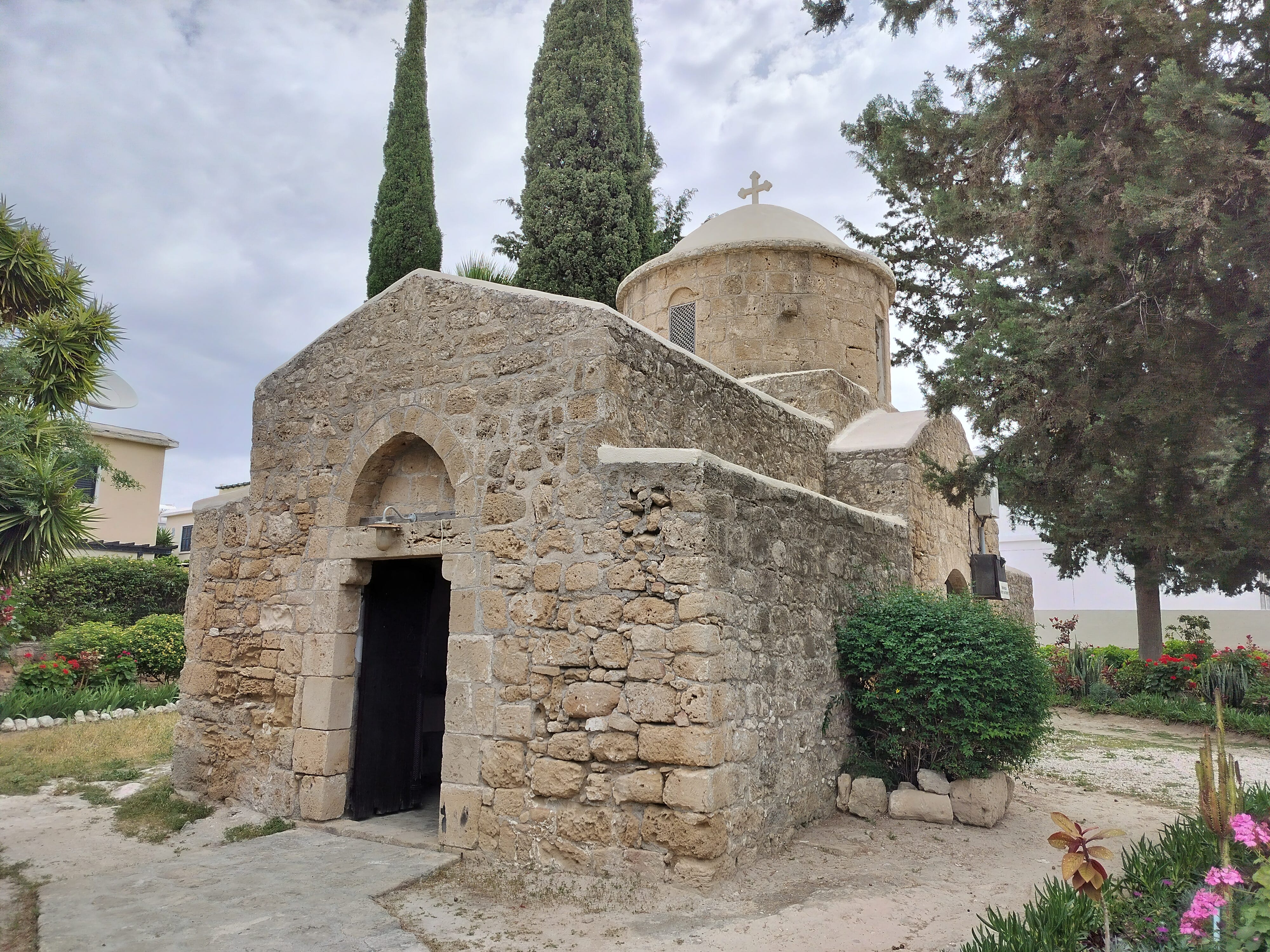
I walked into the garden towards the Church where I was met by a middle-aged Cypriot woman who looked at me with the look of “great, another tourist.” I greeted her with the paschal greeting, and her countenance brightened. With a smile she responded, “Alethos Anesti.”
The Church was old—though it’s hard to tell exactly how old things are in Cyprus—and doesn’t appear to be in liturgical use. Nonetheless, I walked in and lit a candle, thanking God for a safe journey. Having been baptized in another of St. Anthony’s churches, I thanked him for watching over me and granting me a moment to remember God’s providence and care.


This little moment energized me in a way sleep simply could not, and, after taking some photos, I continued on my journey. One thing I quickly discovered and came to love about Cyprus was something which Fr. Peter Heers had spoken of in his lecture at the Philip Ludwell Fellowship Conference last year in Lockhart, TX: in the old country, there’s a church, a chapel, a shrine, every few blocks in every direction. Everywhere I went, there was somewhere to stop and pray, to light a candle, and just reflect on things.
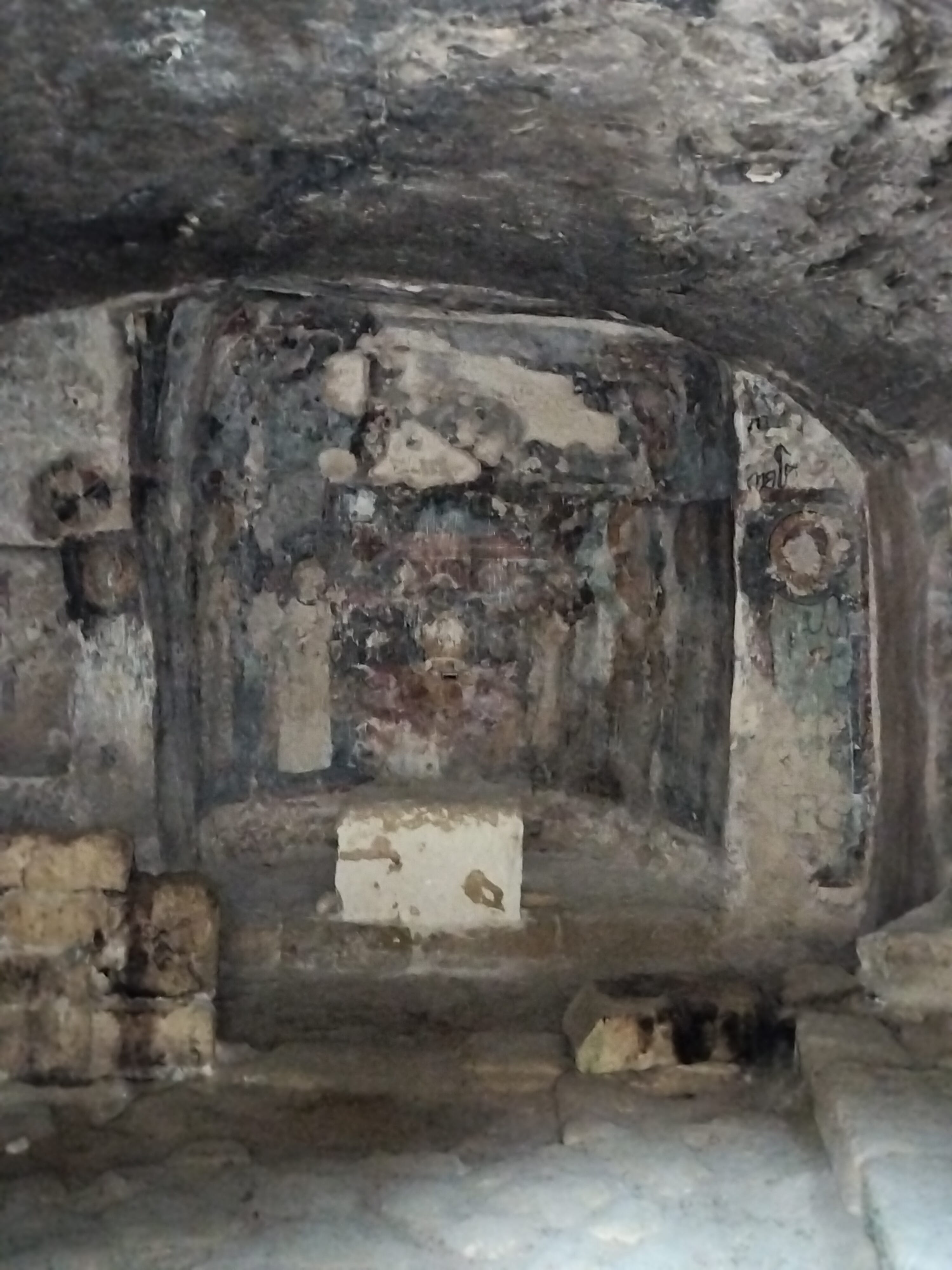
As I continued on my way to the mall, I stumbled upon an old catacomb/cave church and a series of monastic cells.
After making it to the mall, I was able to get a local SIM card which would work with an American phone.2
As I tried to navigate my way back to Agios Antonios, I instead stumbled on some old Turkish Baths, and from there, the ruins of a third century Basilica—the Agia Kyriaki Chrysopolitissa. While the basilica is long gone, its many pillars and beautiful mosaic floors remain.


A newer church, built in the 13th century, now stands in the center of the grounds; unfortunately, it seems to be under the authority of the Catholics or in some joint use agreement between them and the Anglicans—which was rather confusing, but Cyprus was under British control for a long time. As I walked around the site, I saw a small plaque, identifying the very pillar against which St. Paul was whipped during his time preaching the Gospel in Paphos!
It was almost a bizarre feeling to stand there, in this place where the Apostle Paul himself, a man I have heard so much about (and learned so much from) throughout my life, stood, preached, and confessed Christ by force of a whip. Frankly, I never even considered that I could or would see such things in my life.
Later that afternoon I met with some friends living in Cyprus. Some of them are refugees who fled persecution in Ukraine; I will be changing names and obscuring photos of them, not because they’re scandalous people—in fact they are some of the most genuinely kind and loving people I’ve ever had the honor of knowing—but out of concern for them and the ongoing persecution of the UOC. We sat and talked about our faith and families, drinking Cyprus Coffee—which I’ve become obsessed with.3
Just before departing for dinner, one of the priests, Fr. Alexander, relayed that an ancient monastery was being rededicated the following evening; the Metropolitan of Paphos had invited him and friends and that invitation was extended to me.
Day 02: The Monastery of St. George
The monastery itself has an interesting story. It is believed that the Monastery of Saint George Nikoxylitis (Greek: Άγιος Γεώργιος Νικοξυλίτης) dates back to sometime around the ninth century, built upon the foundations of an earlier monastery to St. George which was abandoned during the Arab invasions.
During the Venetian period, the monastery became fabulously wealthy—one of the wealthiest monasteries on the island for a time. This remained the case until the monastery’s decline began in 1808. The Turks kidnapped Cyprus’s bishops, demanding a massive ransom of the population to have them released. The wealthier monasteries and churches of the island came together to sell large swaths of property to secure the release of the bishops. The St. George Nikoxylitis monastery sold a large portion of its land and assets, shining forth as a beacon of Christian charity and monastic detachment from earthly goods.
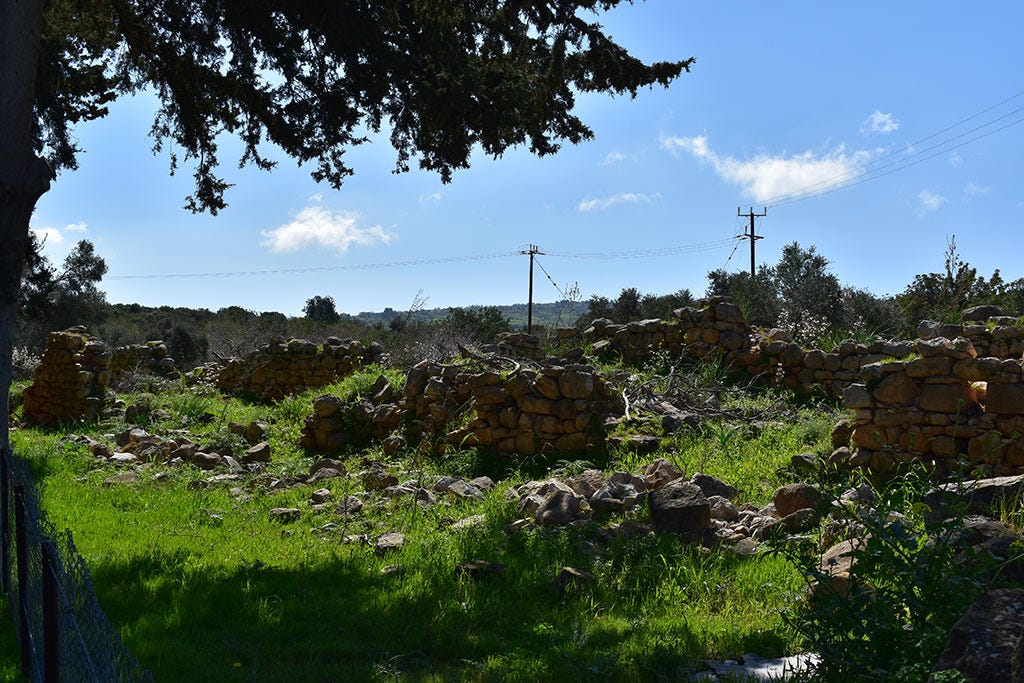
A fire struck the monastery in 1923, leaving only the church of St. George, itself damaged by devastating earthquakes in the 1950s. It has sat vacant for decades, its modest structure obscuring the massive stature which it used to hold amongst the Cypriot people.
But two years ago, the saintly Metropolitan of Paphos, His Eminence Tychicus, set out to renovate and reopen the monastery. By God’s providence, I was witness to this momentous occasion.
We set out mid-afternoon for the monastery, through medieval city streets and winding mountain roads.
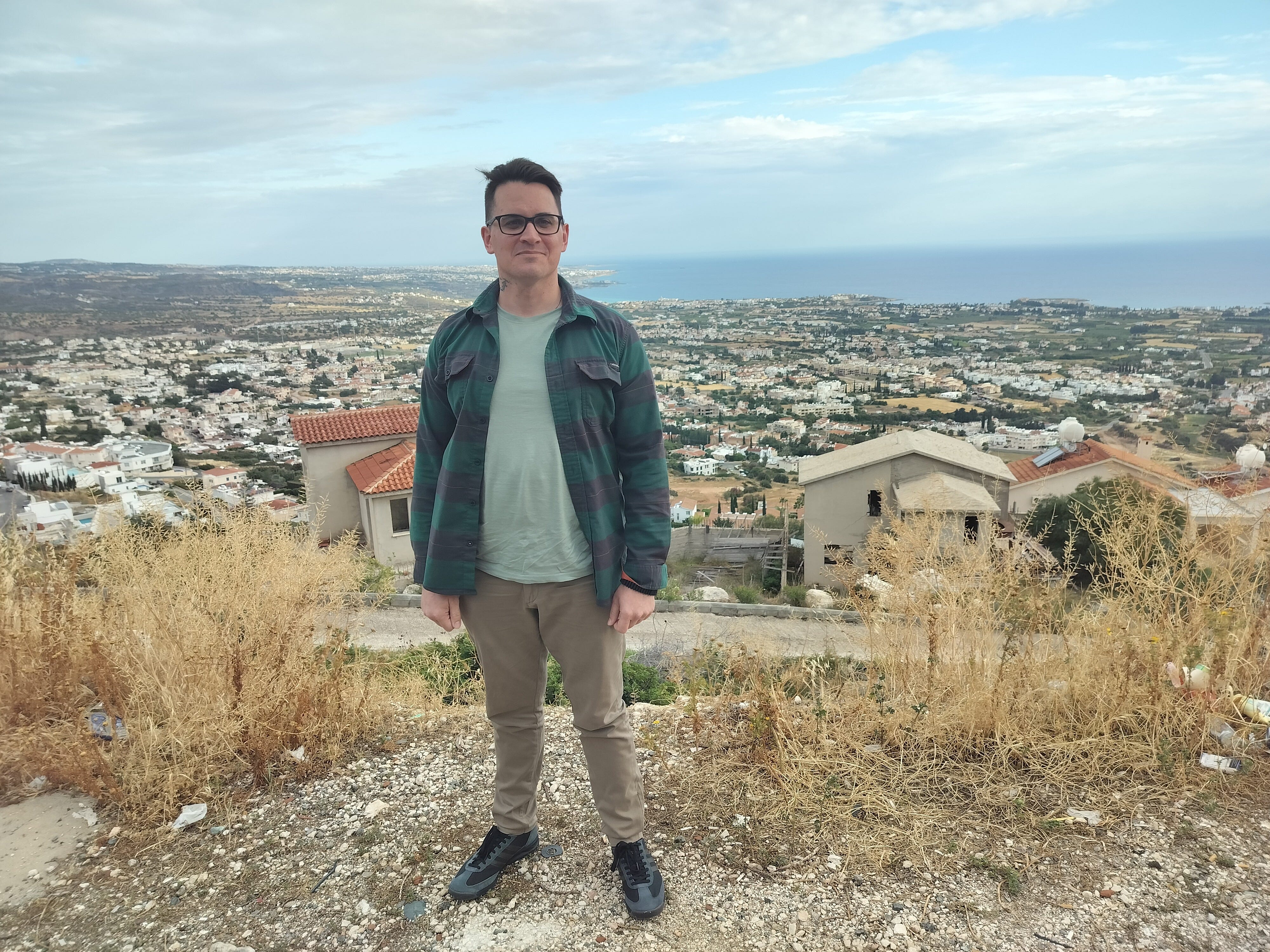
Arriving around 5:00pm, the property was already packed. We walked to the outer buildings, where there was a little shop set up with various wares, then made our way to the Church. It was fairly small, simple and beautiful. The new wood iconostasis was covered in beautiful carvings and new icons. Above the episcopal throne was an old cross set in the wall. Someone told us that this was uncovered during excavations and is believed to be original—or close to it.
As we walked outside, we got a call to come out to the road. The Metropolitan had just arrived, and they wanted to introduce us. “He is considered a living saint. You will meet him.”
Metropolitan Tychicus
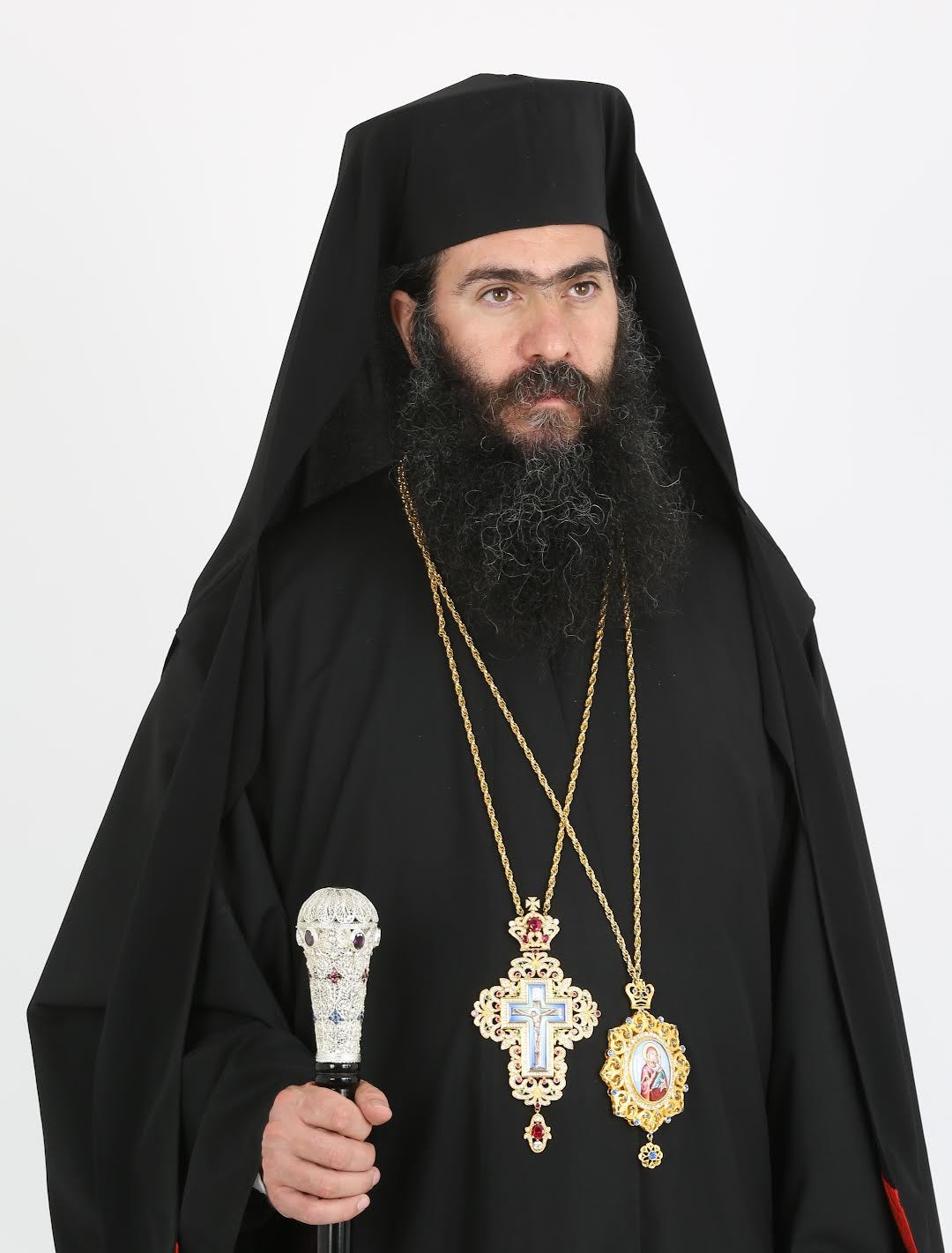
Born on the Feast of the Apostle Tychicus on December 8, 1981, Met. Tychicus was raised in the village of Mesana in Paphos. While his “resume” is impressive (you can find it here), his devotion to his community, to its saints and icons is of particular note.
“During his presence all these years in the Pafos Metropolis, he created, collected and archived records on behalf of the Metropolis concerning churches, icons, heirlooms, relics, as well as records of priests who served in the churches of the Metropolis up to the 19th century… He is taking every effort to maintain and save old icons in many parish churches of the Metropolis”
His Eminence’s love for his community and people is palpable. He spent many years teaching catechism in schools across the Metropolis, organizing catechetical schools and camps, personally crafting the curriculum, and organizing the Young Peoples Community of Paphos. In addition to his zeal for local holy people and things, he is known for his propensity to serve “in ruins and caves where local saints used to live. In many cases, services were performed in such holy places for the first time in many centuries.”
His Eminence is also a respected scholar of Byzantine history and an expert on the topic of the Byzantine era in Paphos. But these, while speaking of the character of the man, say little about the man I met and witnessed serving the liturgy and people of Paphos.
The Rededication
We walked to the road, and Met. Tychicus was standing in the middle of the road with many of the clergy—who were preparing for the arrival of the relics of Saint George. I was ushered over to him and received a blessing. Then there was this somewhat awkward moment where I wanted to ask him a question, then it occurred to me that he might not speak English. Not knowing what to do I just stood there awkwardly for a moment before Fr. Alexander grabbed me and ushered me away. We all got a laugh out of this later.
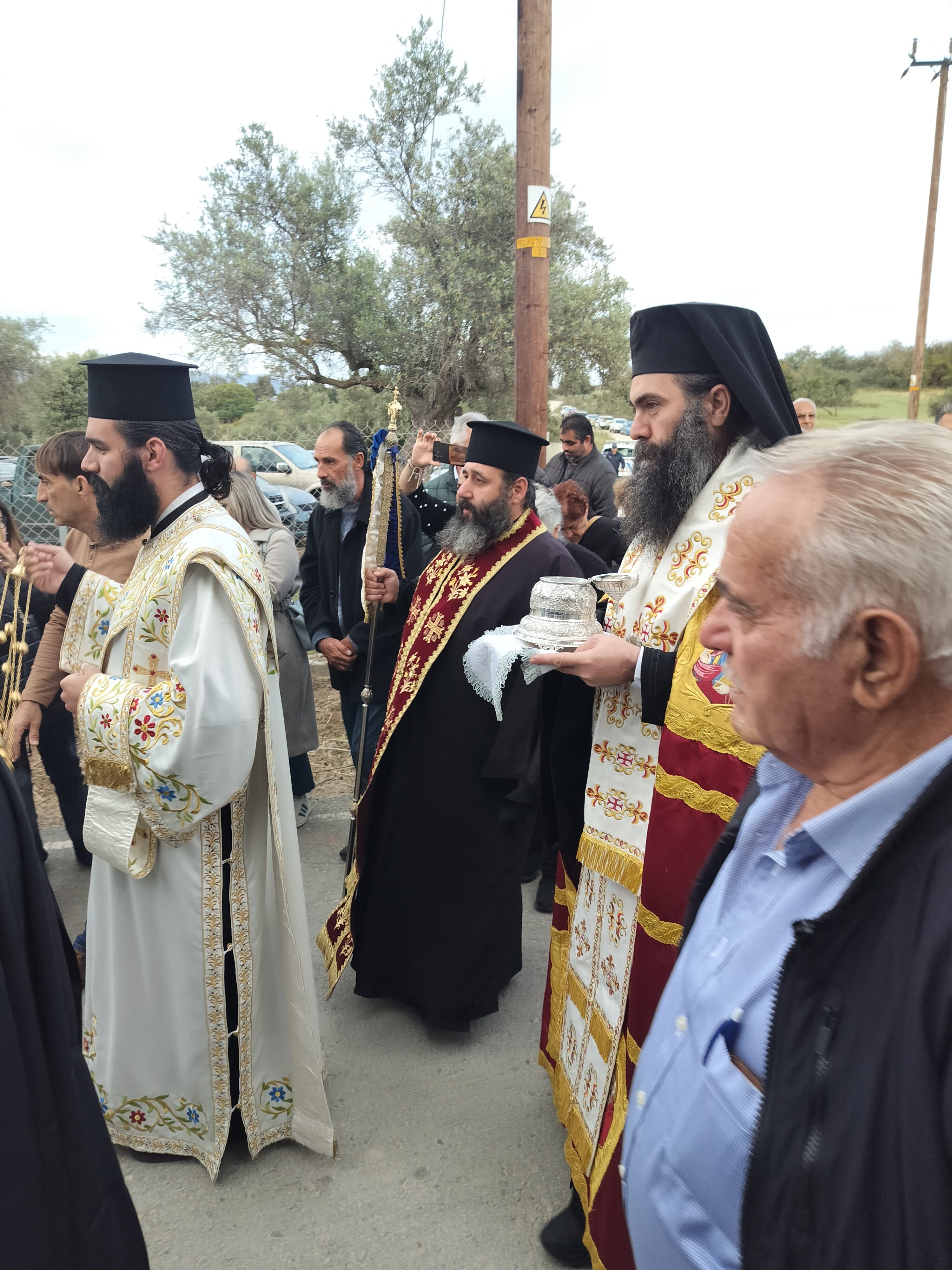
Shortly thereafter, the relics arrived, and we walked in procession to the Church.
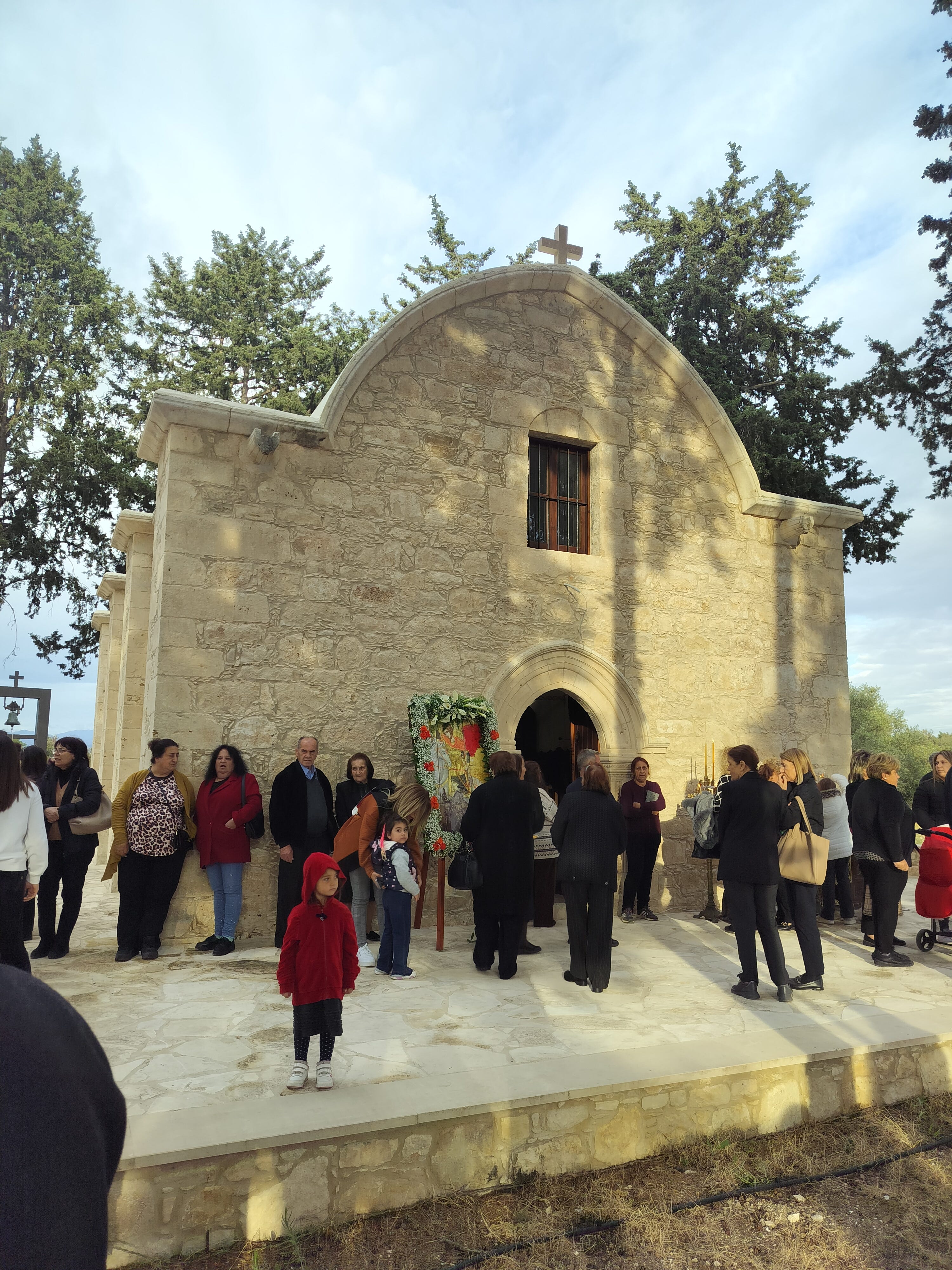
As the Metropolitan and clergy coalesced around the front door, chanting the Paschal troparion, Fr. Alexander came and grabbed me by the arm and dragged me through the crowd until all that was between the Metropolitan and I, were the priests we were with.
After performing the Blessing of the Waters, Met. Tychicus took his staff and knocked on the door three times, with the final knock it started to open and slammed shut. “Lift up your gates ye princes and be ye lifted up ye everlasting gates and the King of Glory shall enter in!” This was, of course, in Greek, but what was occurring was clear. From the other side of the door came “who is this King of Glory?” The Metropolitan continued, and as the verses came to an end, the door was flung open. Father Alexander again dragged me through the crowd of yiayias flooding the doors, and we entered behind Met. Tychicus and the relics of St. George.
Thus began the services of the evening. Having started at about 6:00pm, we moved forward to the All-Night Vigil and Divine Liturgy, which came to an end just before 3:30am.


The chanters were the real stars of the evening, both for their skill and endurance—these were long services. At least in the States, Byzantine chant is often poorly done. I’ve often seen where parishes will try to implement some sort of multi-part harmony with the chant, or amateur female chanters will try to join professionally trained male chanters and it rarely turns out well. All of this leads to a poor experience. But in Cyprus, particularly at these services, the Byzantine chant was really well done, both beautiful and edifying.
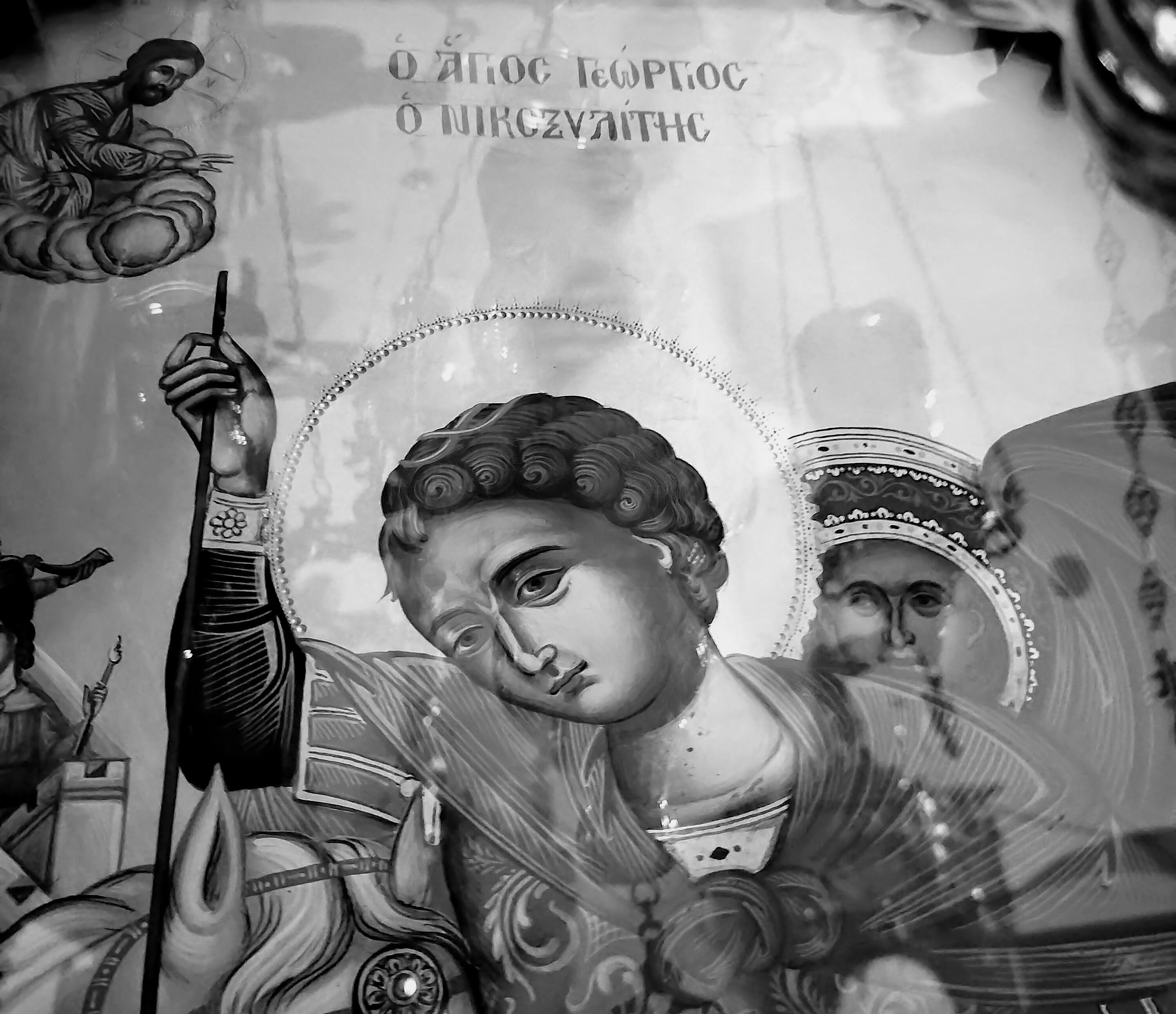
Father Alexander had placed me under the icon, or as he put it, under the protection of Saint George. Saint George would end up playing a prominent role in the whole trip, and here under his icon in his ancient monastery, I felt very much that he was present and guiding our steps along the way.
As the sun set and the many candles and vigil lamps took on the majority of the work of illuminating the temple, the atmosphere became increasingly prayerful. The sanctity of this place, hallowed by more than a thousand years of prayers and offerings, seemed to seep from every crack and crevice. The gentle light of the lamps reflected off the gold leaf of the icons, bathing everything in a warm glow. Metropolitan Tychicus often seemed to be looking off into another world, his gaze focused long beyond the bounds of the small temple. It gave me the distinct feeling that, unbeknownst to many of us, the angels had truly joined us in the temple—and His Eminence could see them. In an environment such as this, knowing Greek was simply unnecessary; it seemed that our souls simply understood what our ears could not.
As the night dragged on small groups would form outside the church as people rested their legs and spoke about the event before returning to the service. What surprised me was just how many stayed to the end of the service, and how many elderly couples—and even teenagers—stayed through to the end. Nor were Cypriots the only Orthodox people in attendance either. There’s a sizable Ukrainian diaspora in Cyprus, and these were well represented at the service.
Around midnight, there was a procession around the church, in which all walked under the ancient icon of St. George before entering back into the building.
As the service came to a close, we all filed out of the temple. In the outbuildings to the side of the Church, the women had prepared Cypriot Coffee, Baklava, and other treats. We met Metropolitan Tychicus again on the path to the outbuildings; he gave us each his blessing again and seemed genuinely overjoyed that we had come with the Ukrainian clergy who invited us. Someone asked if we could get a photo, and several of us took a photo with Vladyka.
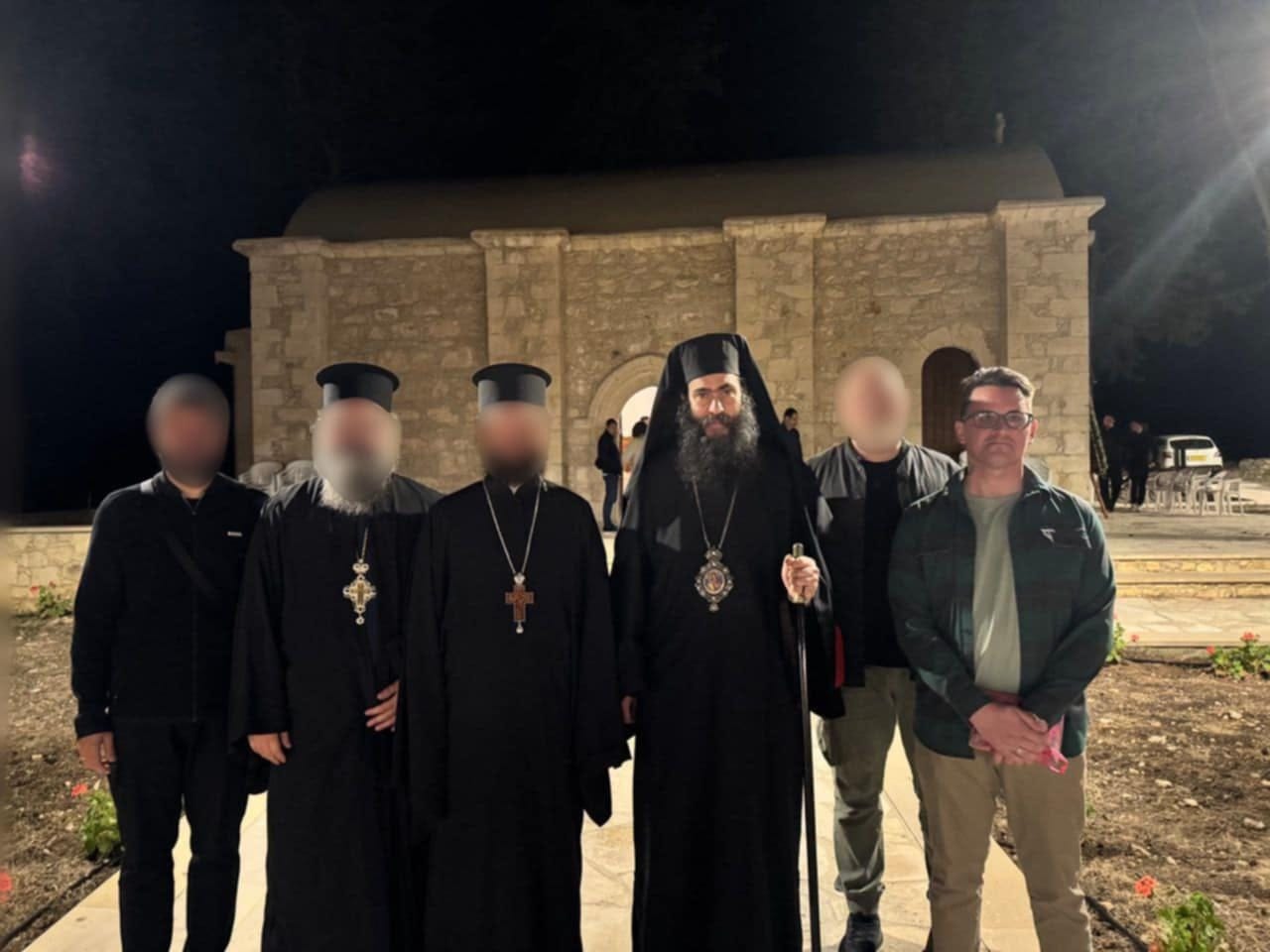
We then entered the outbuilding and grabbed our little disposable cups and plates. Metropolitan Tychicus sat with everyone on the low benches along the walls. The Ukrainians and Russians especially appreciated this. Anyone familiar with the Russian Church knows that when a bishop—especially a Metropolitan—comes to our parishes it's a major affair. We roll out the red carpet and the fine china. But Metropolitan Tychicus sat there with the rest of us, enjoying the simple pleasure of coffee and sweet treats after a long fast and service. Rising from the bench, he prayed for everyone and departed. We were not far behind him. We bid farewell to our friends and began the hour-long drive back to the hotel in Paphos. I arrived sometime around 4:30am. The lights were off and not a soul was found in the lobby. I made my way to my room, thanked God and St. George for the blessing of this experience and quickly fell asleep.
Conclusion
As much as I have written here, it pales in comparison to the experience itself, and there is so much more to say. One thing I hope to touch on in future installments is the oneness of mind which prevailed amongst our party, in spite of the language barrier. Very often, much was communicated without words; often we would look at one another and know exactly what the other was thinking, confirmed by a saying which rang out continuously: Slava Bogu.
Or in English: Glory to God.
One thing I hope readers walk away from this series with is the absolute necessity of going on pilgrimage. In Western spirituality, the practice of pilgrimage has been all but forgotten. Those who do participate in it, do so just as they would visiting a battlefield or other historical attraction. I’m not saying you can’t take pictures—you should, use them to entice friends to do the same—but pilgrimage is more than tourism. It’s an expression of love for God, for the saint to whose shrine you travel; it’s an offering to God; it is an asceticism and form of repentance, a way by which we honor God and His saints. Is a family member sick? Travel to the Holy places, make your prayers and offerings there, the Lord will bless you.
Something which struck me was just how palpably I could feel the sanctity of the places I went. You could feel the effects of the centuries and centuries of prayers which had hallowed the very ground you walked on, the air you breathed. A thought entered my mind: what if America had such places? From this, a prayer spontaneously burst forth from my lips: God, grant that we may cover our land in shrines and places of prayer, that we may sanctify the ground from which we are raised and onto which we will return, to Thy Glory. Amen.
British Airways was wonderful. I took four flights with them. Each one took off early once all passengers were on board. the planes were spacious, much newer than most American planes, each was maybe half full, maybe a bit more. They were giving us food and drinks pretty much constantly, the attendants were friendly, and the pilots’ dry British humor was welcome. Everyone from the ticket counter to the pilots were great. Furthermore, going through security and customs in the UK and EU was a breeze. The longest I waited in security during my layovers was maybe 15 minutes.
US phones typically won’t work in Cyprus, even with an international plan. The signal used by US carriers is different, and so US iPhones and Samsungs won’t typically work in Cyprus—even with a local SIM card. I, however, am cheap, so I have an unlocked Chinese phone. This was able to accept a local SIM card, and even route texts and voicemails through the number of my US SIM card. The SIM is prepaid, with unlimited talk, text, and a few GB of data for just 15€.
Whatever you do, do not call it Turkish Coffee. Like most things in the Balkans and Near East, the origins of popular foods, cultural items and customs is hotly debated. There is certainly a difference in the way each group makes their version. I’m happy to call it Cyprus or Cypriot Coffee, as when I drink it now I will recall fond memories with friends in Cyprus.
Beautiful pilgrimage, brother! Thank you for sharing your experiences.
What a wonderful read. Thank you for sharing, Ben. Slava Bogu.